

Andy Shudall is the senior pastor at Eastgate Christian Centre, a Baptist church in Auckland.
In January of 2010 I received a phone call that changed my life. Paul Windsor, relatively new to his role as the International Director of Langham Preaching, phoned to ask if I could step in for a speaker who had pulled out from a seminar in Vanuatu. I was working with Tertiary Students Christian Fellowship (TSCF) at the time and attending Eastgate Christian Centre with my family. Paul was a friend, I was free that week and it seemed a good fit, so I went.
That week in Vanuatu reshaped my understanding of preaching as partnership across cultures, languages, and generations. I saw what happens when God’s word takes root in contexts beyond Western seminaries and in under-resourced communities.
Fifteen years on, I’m still connected to this work, and so is Eastgate.
When I called Paul about this article, he was in Lebanon for a leadership meeting; the following day he was flying to Ghana for a gathering of two leaders from each of the thirty-two sub-Saharan countries where Langham Preaching works.
He’s back home in New Zealand in early December for a meeting of leaders from across Oceania and the Pacific Islands. The South Pacific is one of Langham’s most pressing needs and Paul has suggestions on how New Zealand Baptists might partner with the Majority World.
“Pray for them, Also, build friendships—church to church, pastor to pastor—with our neighbours in Tonga, Samoa, and beyond. They’re either our Judea or our Samaria (Acts 1:8). There’s so much possibility right on our doorstep.”
When Paul talks about Langham Preaching, he refers to it as a movement — never as an organisation.
In New Zealand, when someone feels called to preach, there are colleges and institutions ready to train them, but in much of the Majority World, that’s not possible.
“The vast majority of preachers will never get near a seminary. They preach several times a week in their heart language and yet have had no formal training. That’s who we serve.”
His joy lies in gospel cross-fertilising.
“In Egypt last week they trained their first local facilitators. The seminar leaders came from Indonesia and Kazakhstan. No white Western intermediary, no dependency — just the Majority World church being strengthened and strengthening. The same in Sri Lanka, where Indian and Pakistani facilitators work together every year. That gives me enormous joy.”
Langham Preaching is about nurturing a movement rather than a course or a programme, he says.
“Courses are static. You come, you learn, you leave. Movements are dynamic. You practise what you’re learning, and you pass it on. At the heart of Langham Preaching are small groups where preachers meet monthly to prepare, pray, encourage, and sharpen one another. Transformation happens in the practising and the passing on.”
A typical Langham seminar might have 20-30 people gathered around tables. They’re highly interactive and heart-language driven, meaning Paul usually needs a translator when he’s training. And he uses whatever resources the local trainers themselves will have access to.
“I hide my Mac; I use butcher’s paper and whiteboards—whatever the local trainers can use at home. I model a method of scriptural confidence as much as scriptural content. It’s not technology or resources where transformation is found.”
Many of the preachers are bi-vocational, sustaining families by paid work while shepherding congregations that can’t afford to provide for them.
“They’re bright, motivated, and hungry, often without much formal education, but full of faith and determination. We aim for diversity: denominations, gender, and experience. It’s an inclusive space. Listening to understand rather than to respond is the foundation for all learning and for preaching itself.”
Our conversation turns to New Zealand, and Paul’s tone becomes even more tender. The former Principal of Carey Baptist College (1998-2009) mulls the changes he’d make to training preachers if he could have his time again,
“I’d rebalance how we train preachers here. We’ve put too much weight on charisma, presence, and polish, and not enough on the character, conviction, and confidence of the preacher. What holds you when things go bad isn’t technique—it’s truth.
“I often think of a picture of my daughter holding our granddaughter, whose little fingers precariously clutch a huge picture book. What an image of the preacher trying to hold their convictions. However, the more significant image is that of her mother’s arms holding the child: convictions holding preachers. For preachers, conviction and character are as vital as skill.”
Asked what he’d say to new or occasional preachers, Paul emphasises the need for making space for the Word of God and building conviction.
“Linger in the word of God on your own. Observe. Pray. Let the Spirit excite you about what you’re discovering. Don’t copy someone else’s sermon; be shaped by the text yourself. Learn to wrestle with Scripture until you can say, like Jacob, ‘I will not let you go until you bless me.’ That’s where transformation is born.”
One challenge for the future is how exposition works among oral-preference learners and digital-native generations, says Paul.
“On the whole, the Majority World isn’t literary, and many young people don’t read in the way previous generations have. How we teach the Bible among them is the task and question for the next decade!
Back to 2010: my one-week, last-minute fill-in became a six-year commitment to encouraging and resourcing the Langham work in Vanuatu. Out of that grew friendships that led to an invitation for Eastgate to send teams to provide building support for Skripja Yunion (Scripture Union Vanuatu). That invitation grew into a partnership that continues today.
In 2017 my focus shifted to Fiji where I helped initiate and supported the training work there. Through lockdowns and the COVID-19 pandemic, that work has grown in strength and now fuels and resources wider ministry across the Pacific.
A woman who is now a facilitator in the South Pacific told me, “Before Langham, I felt like I was walking through the bush on my own, but the training provided a pathway so that I can preach God’s word well.”
Global mission is not about “going” or about “receiving.” It is about obedience to Jesus’ call and attentiveness to the opportunities He opens. Global mission is about real friendships, long-term relationships, bringing practical support, and being anchored by the conviction that we are blessed by God in order to be a blessing to others. It is a privilege more than a responsibility. It’s joy, not a burden, in seeing what God will do.
Image credit:
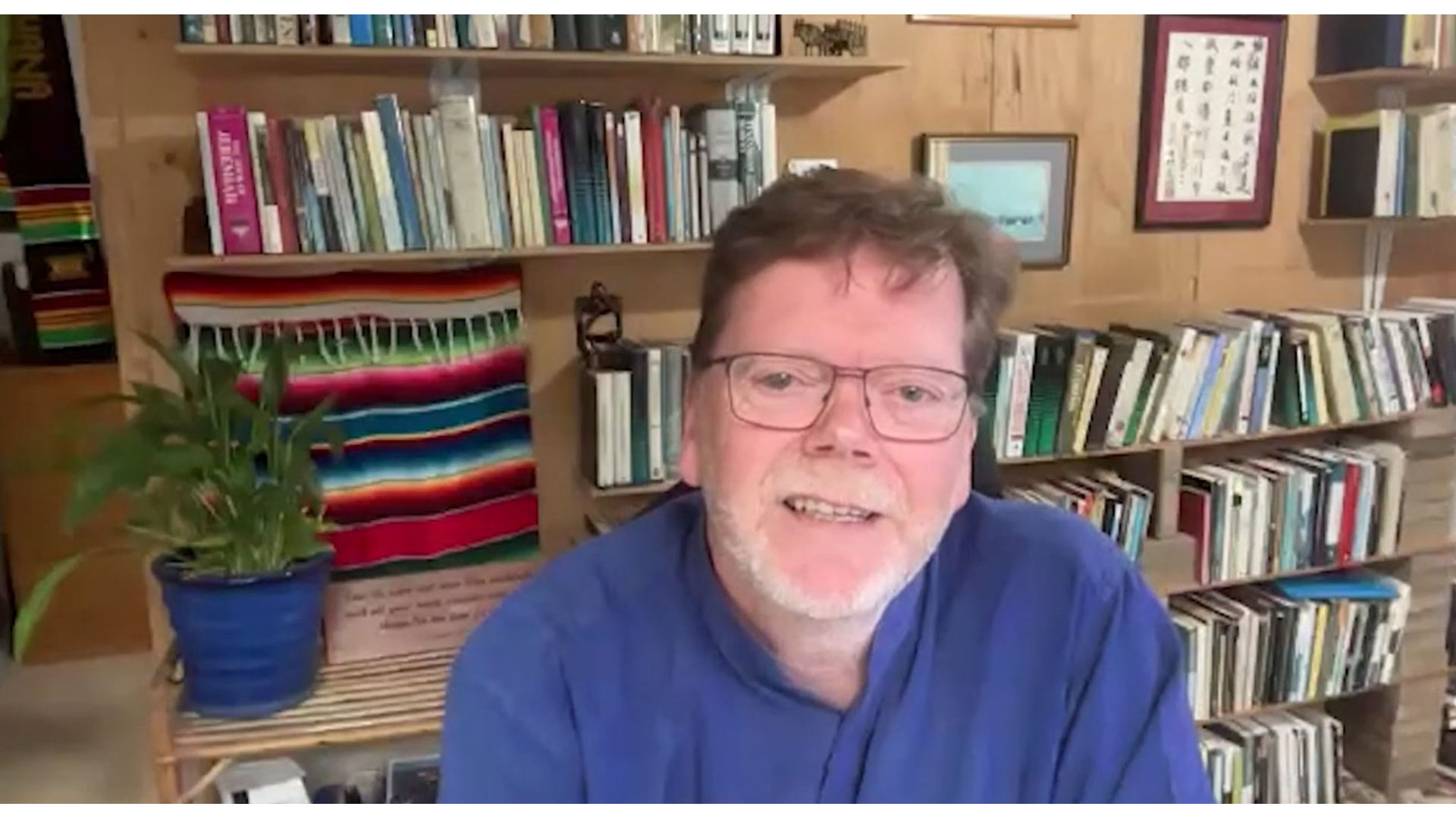
A screenshot of a 2025 video interview with Paul Windsor by @LanghamPartnershipUKI